
← Back to Botanical Scout

The Botanical Scout method

Scout. Observe. Grow.

A plant makes more sense when you see where it has chosen to grow. Field observation adds context that a photograph—and sometimes even a book—cannot fully provide.

What scouting reveals

Understand the place before making assumptions about the plant.

I observe the soil, slope, drainage, sunlight, moisture, surrounding vegetation, and the plant’s response to heat, drought, and seasonal change. These details help me understand what the plant needs and where it may thrive in a cultivated landscape.

I also look beyond the individual plant. Are young plants emerging nearby? Is the population reproducing and expanding, or are only a few older plants remaining? Has roadwork, development, grazing, or another disturbance changed the site?

Field observation cannot determine a plant’s formal conservation status, but it can reveal whether a local population appears healthy, under pressure, or at risk of disappearing.

That is what scouting means at Botanical Scout: finding a plant, understanding its place, and sharing what the landscape teaches about growing it responsibly.

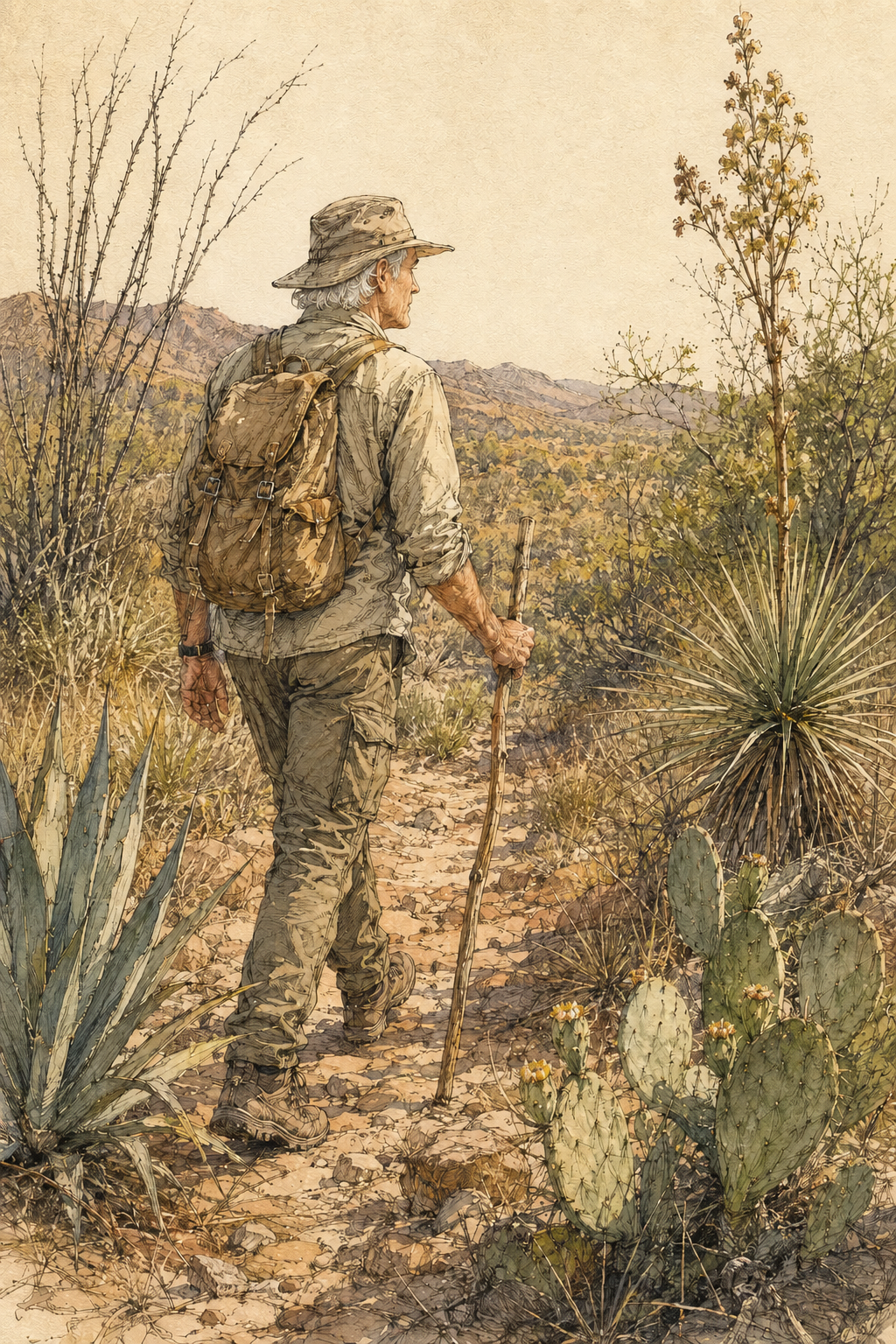
A field botanist hiking through a dry landscape while observing plants
Field principle 01Observe before assuming.Leaves, roots, color, season, soil, and setting are evidence. The plant is always revealing something about its nature.

Where it began

Practical knowledge, learned too late to fully appreciate it.

I first learned about growing plants from my grandmother, although I did not understand the importance of what I was seeing at the time. For her, growing food was not a hobby. It was part of how a person lived, prepared for the future, and cared for others.

What appeared ordinary to me as a child was actually a lifetime of practical knowledge about seasons, soil, plants, and sharing what the land could provide. I recognize now that much of what I do began there: grow carefully, observe closely, learn from experience, and help what you grow benefit others.

Learning to read the plant

Begin with the conditions the plant actually experiences.

“Think like a plant” means beginning with the conditions the plant actually experiences, rather than those we assume it should prefer. Where it grows, when it flowers, how it responds to drought, and even which side of a hill it occupies can reveal what it needs.

These patterns are evidence. Growing a plant well begins with noticing them—and being willing to let the plant correct our assumptions.

More than 50 years growing

Share what the plant reveals.

“Plants do not all endure difficult conditions in the same way. Some conserve resources, some change strategies, and some wait for the right moment. Their different responses are part of what makes them worth understanding.”