← Back to the plant collection

Botanical Scout plant profile

Bird of Paradise Collection

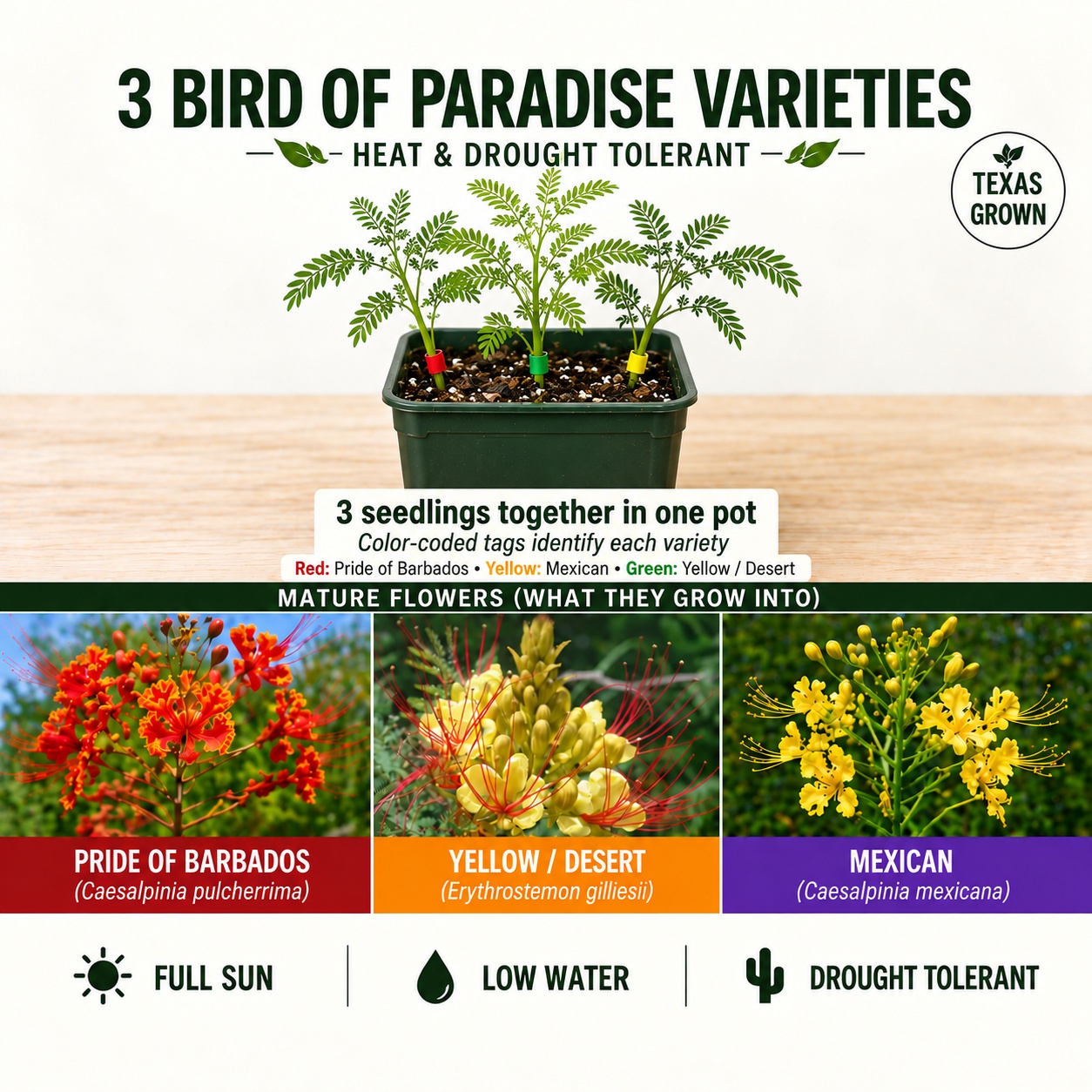
Pride of Barbados · Yellow / Desert · Mexican Bird of Paradise

Compare three different plants that share a common name: fiery flowers, crimson stamens, and clear yellow clusters.

Plant fit at a glance

Mature height & width
Three different shrubs; separate and space for each species. See individual profiles for mature dimensions.
Foliage
Varies by species and winter climate
Winter cold
Winter needs differ; Yellow / Desert is generally the most cold tolerant. Protect all three seedlings from freezes.
Before planting
Pride of Barbados develops prickles.

Dimensions and cold guidance describe established plants, not a guarantee for seedlings. Protect young plants; soil, drainage, exposure, and freeze duration matter.

Growing reference
Open the growing guide

Before you choose

Is it a good match for your landscape?

Mature form
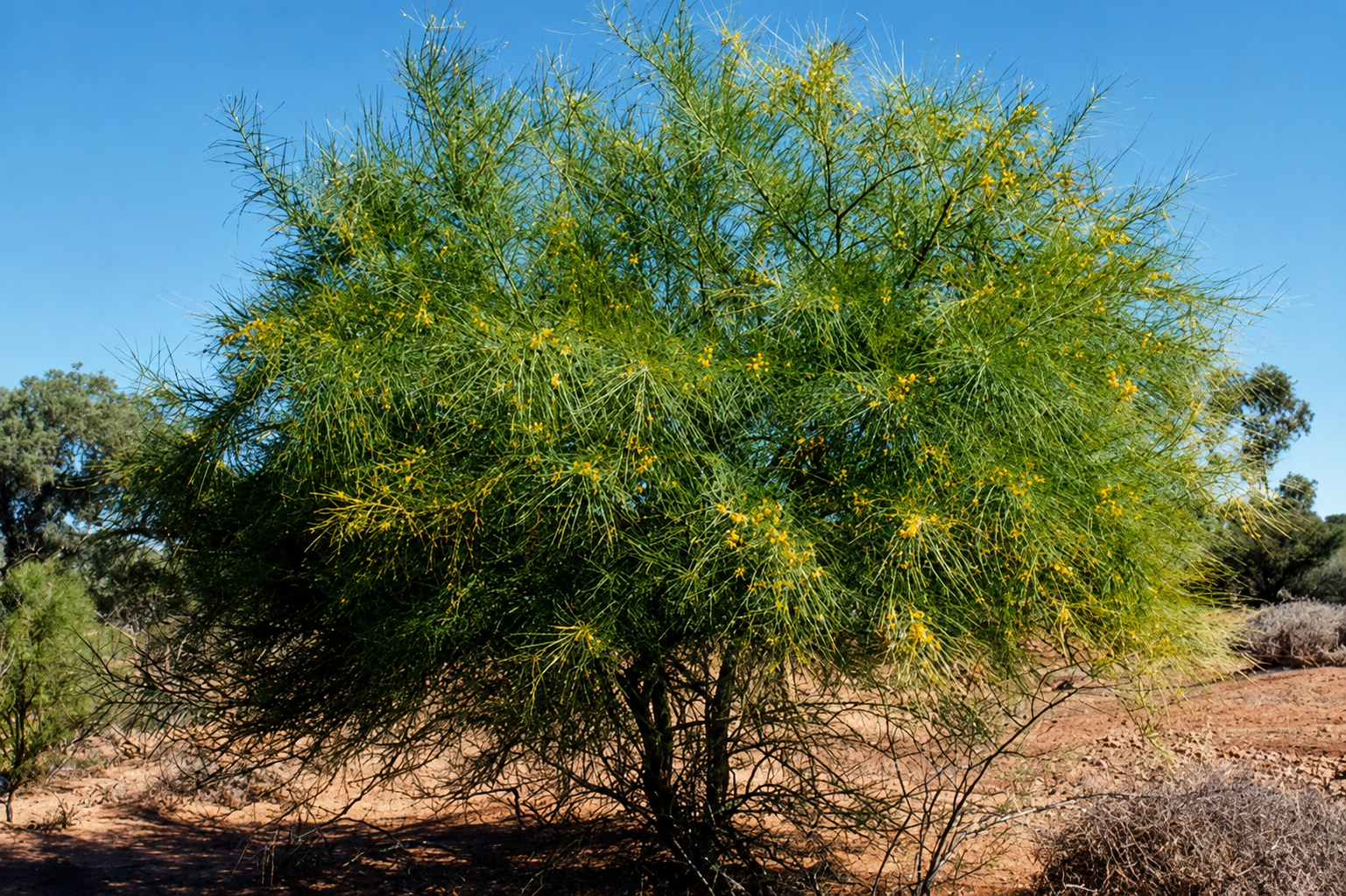
Three contrasting flowering shrubs; Mexican Bird of Paradise can become a small tree
Growing conditions
Full sun after acclimation · Heat · Well-drained soil · Low-water landscapes once established

Choose sunny locations with good drainage and give each species room to develop its distinctive mature form. Winter protection helps young plants establish strongly.

The personal story

Why I keep growing Bird of Paradise Collection

A shared common name does not mean a shared personality. Grow all three and watch their differences emerge: fiery blooms, long crimson stamens, and bright-yellow flower clusters.

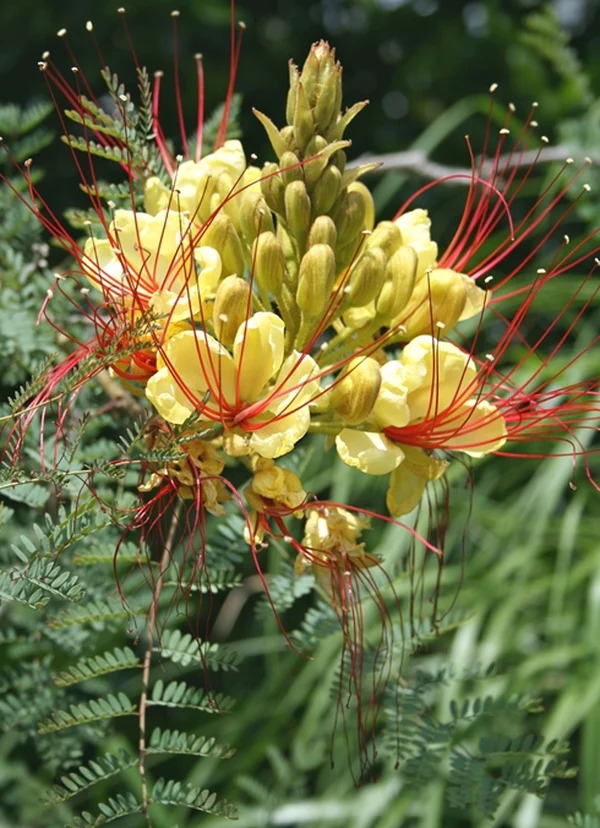
These three plants share a common name but have different personalities. Pride of Barbados brings fiery orange-red and yellow flowers; Yellow / Desert Bird of Paradise has pale-yellow petals and long crimson stamens; Mexican Bird of Paradise carries clear yellow clusters.

Growing them together offers a chance to observe their differences in foliage, flowers, and form. Mexican Bird of Paradise can become a small tree, while the others bring their own distinct shrub forms to the garden.