← Back to the plant collection

Botanical Scout plant profile

Mexican Bird of Paradise

Erythrostemon mexicanus (syn. Caesalpinia mexicana)

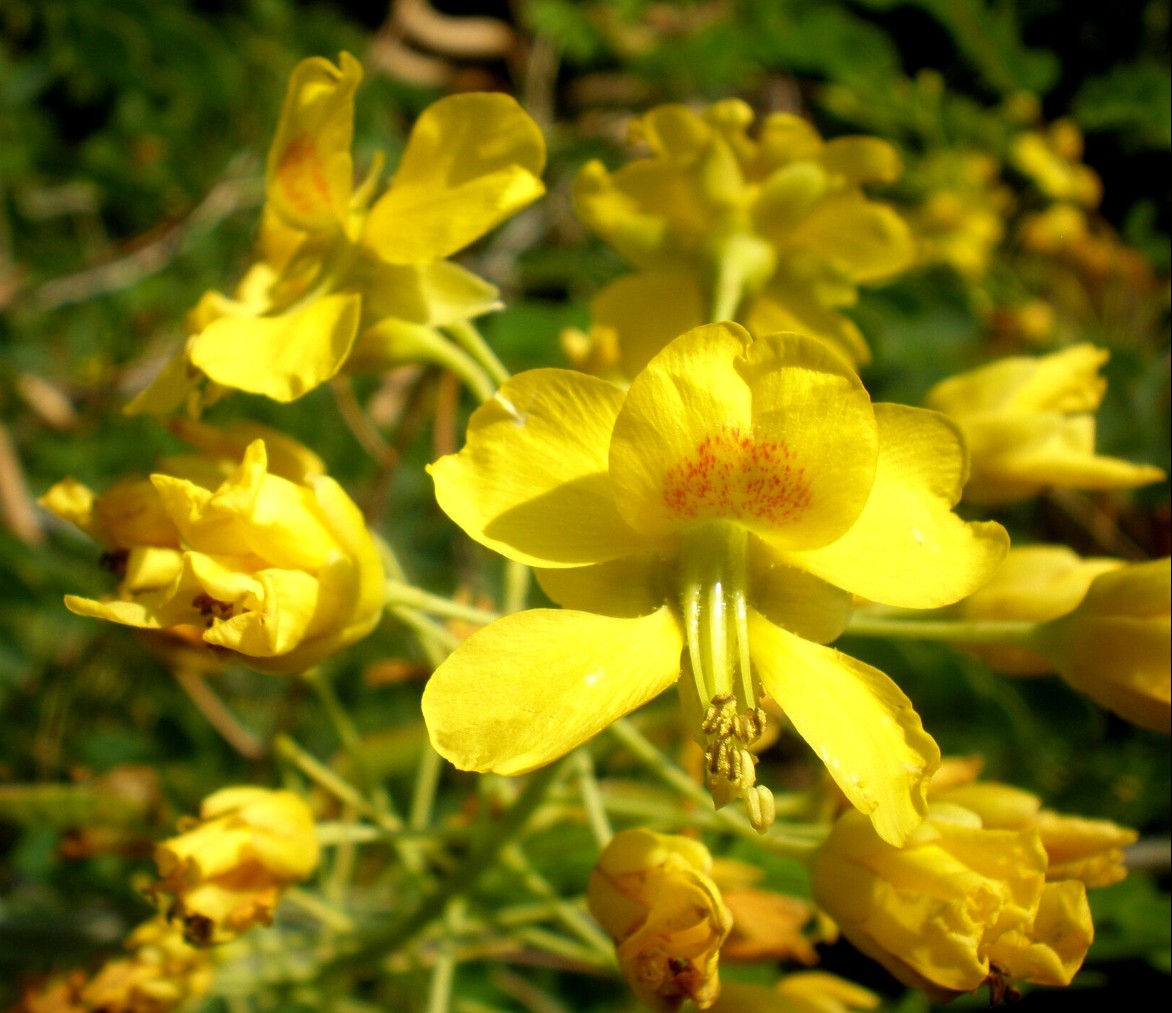
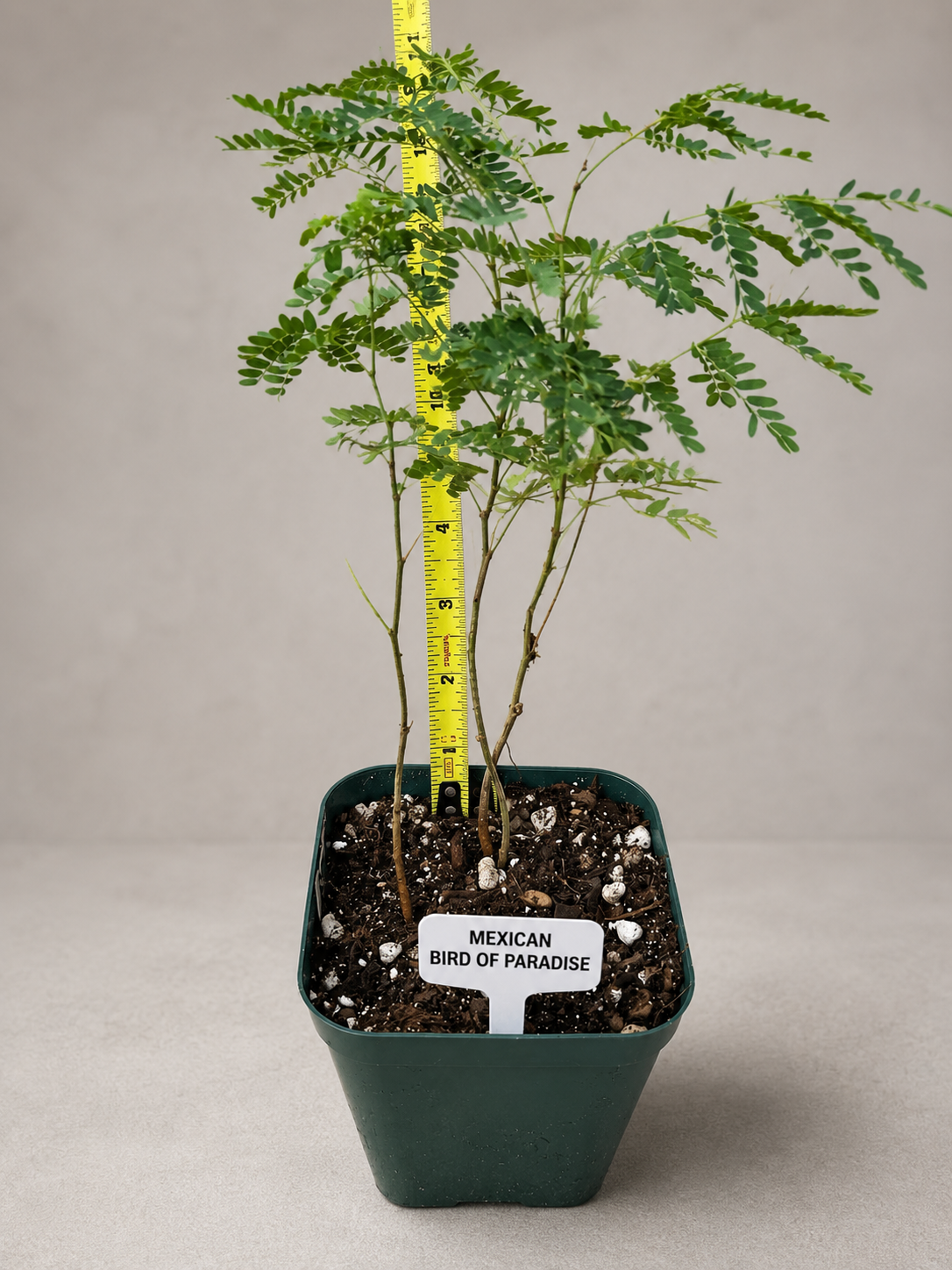
Clear yellow flower clusters and feathery foliage on a thornless plant that can become a graceful small tree.

Plant fit at a glance

Mature height & width
About 12–15 ft tall; allow roughly 12–15 ft of width in warm sites
Foliage
Evergreen in warm climates; may lose leaves or die back after freezes
Winter cold
Cold response varies; established specimens have survived upper teens °F, sometimes with dieback
Before planting
Thornless.

Dimensions and cold guidance describe established plants, not a guarantee for seedlings. Protect young plants; soil, drainage, exposure, and freeze duration matter.

Growing reference
Open the growing guide

Before you choose

Is it a good match for your landscape?

Mature form
Large shrub or graceful small tree
Growing conditions
Full sun to light shade · Limestone or well-drained soils · Low-water landscapes

Allow room for a large shrub or small tree, about 15 feet tall in favorable conditions. A warm, sunny, well-drained location supports its best growth, and young plants benefit from winter protection while establishing.

The personal story

Why I keep growing Mexican Bird of Paradise

Its range and adaptations connect South Texas with Mexico—two landscapes shaped by heat, limestone and alkaline soils, drought, and highly variable rainfall.

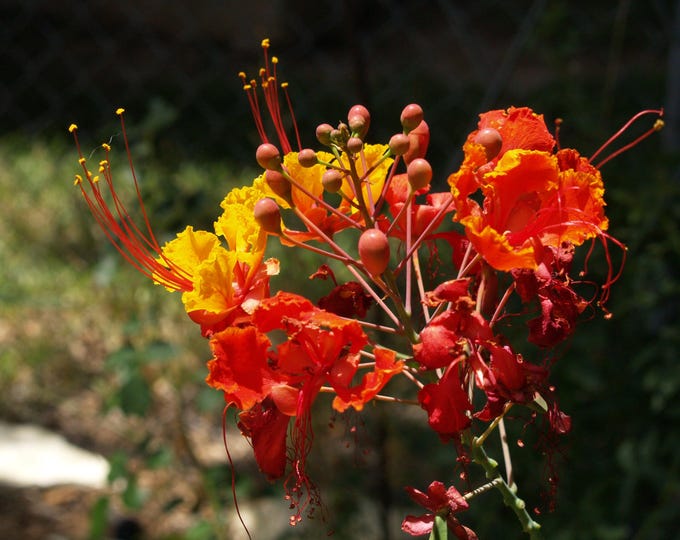
Mexican Bird of Paradise grows naturally from extreme South Texas through Mexico. Its clear yellow flower clusters distinguish it from the red-orange flowers of Pride of Barbados and the long red stamens of Desert Bird of Paradise.

I collect seed from older Austin plantings that have persisted with little attention. Some have become genuine small trees. They show what is possible in a favorable site, although age, genetics, and microclimate all influence how a plant performs.