
The personal story
Why I keep growing Pride of Barbados
It looks tropical and delicate, but its ability to keep flowering through extreme summer heat is exactly what makes it worth noticing.
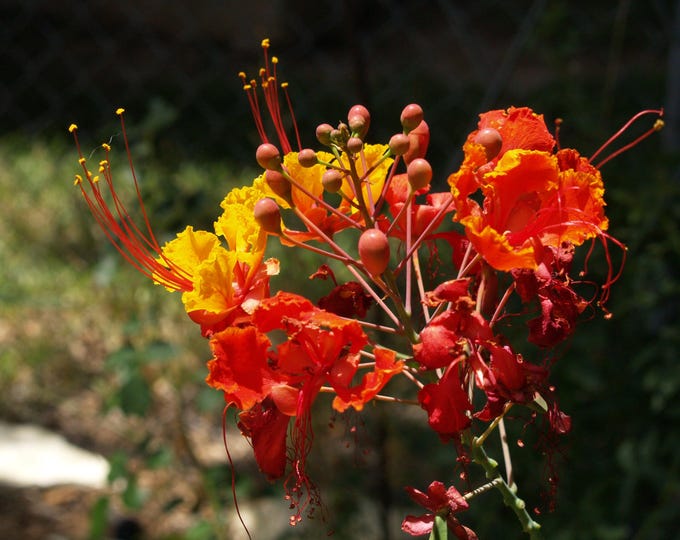
Pride of Barbados is the national flower of Barbados. Its brilliant red, orange, and yellow flowers bring an almost tropical display to the warm-season garden. The name pulcherrima means very pretty—a fitting description.
The bird of paradise in my mother-in-law’s yard is blooming, producing seeds, and—perhaps its greatest achievement—being ignored by the deer. Around her retirement community, deer treat the landscaping as a neighborhood salad bar.
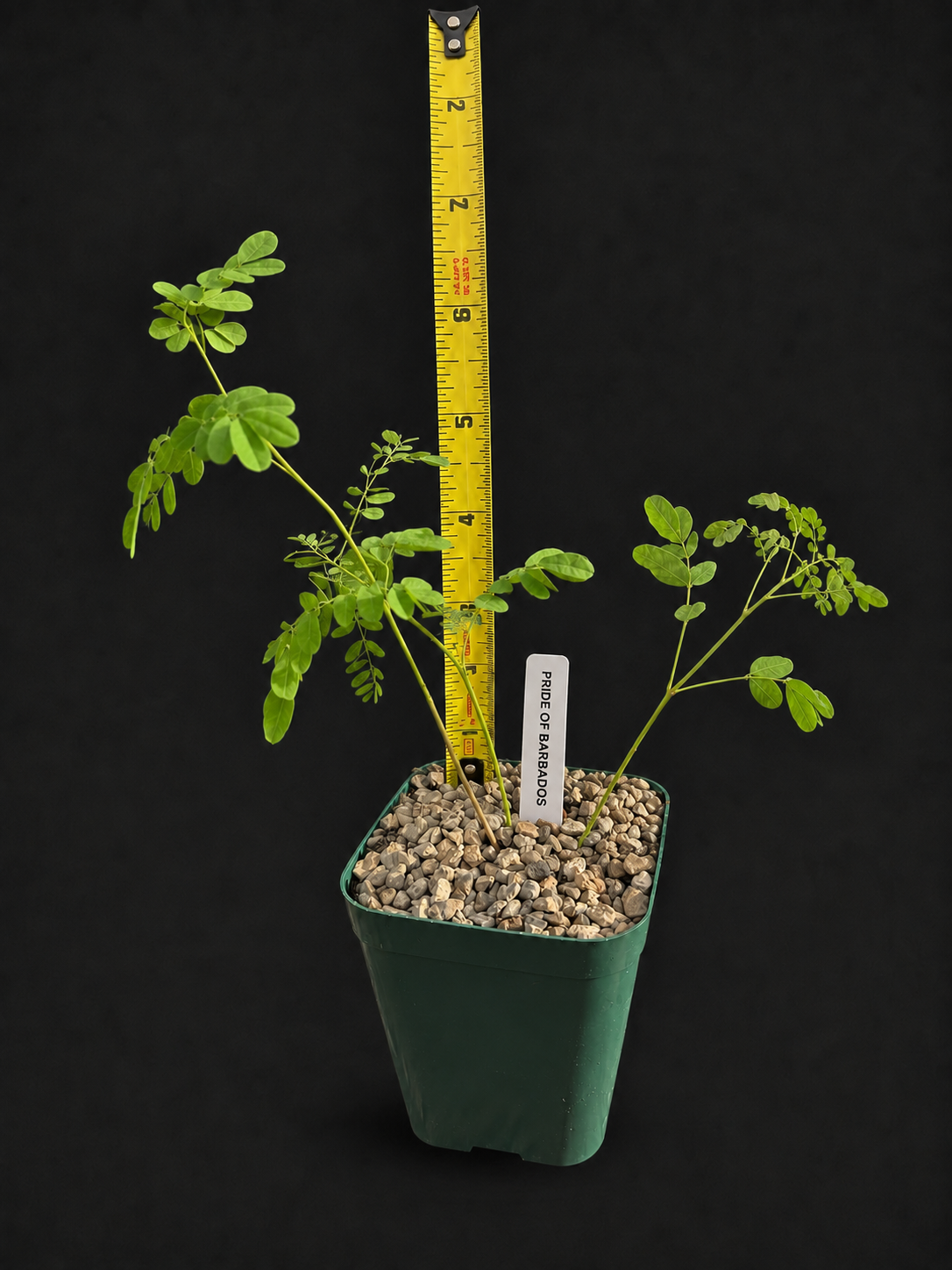
Her neighbors planted seeds, but none germinated. She shared her secret: scarification, gently nicking or wearing down the hard seed coat so water can get inside. The seeds needed a little scratch, not another encouraging speech.
I’m happy she’s sharing what she’s learned. That’s one of the pleasures of gardening: watching a good discovery spread from one gardener to another. The neighbors are grateful. The deer would prefer she kept growing salad.
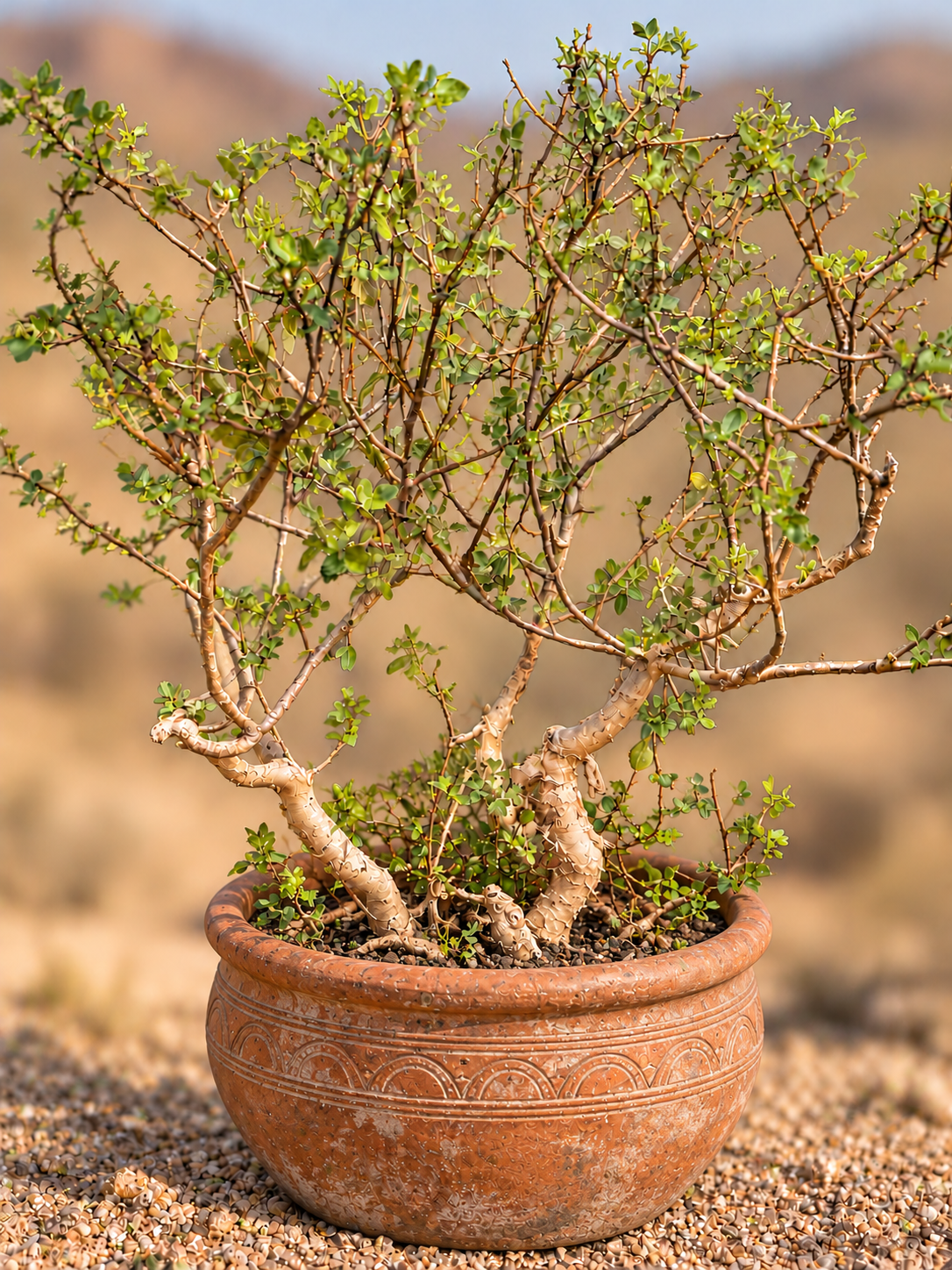 Mature plant — edited growth reference
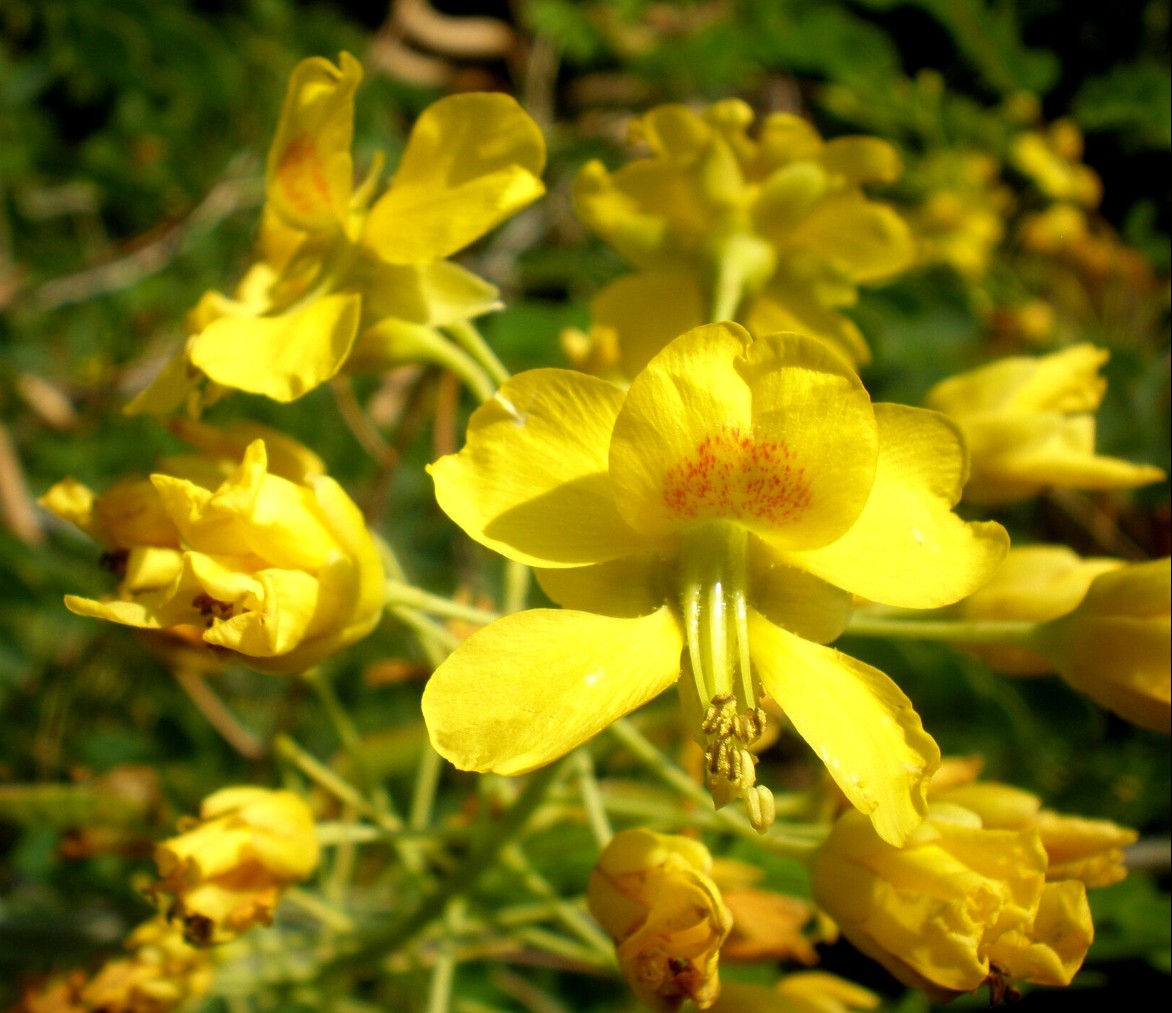 Mature plant — growth reference