← Back to the plant collection

Botanical Scout plant profile

Mexican Olive

Cordia boissieri

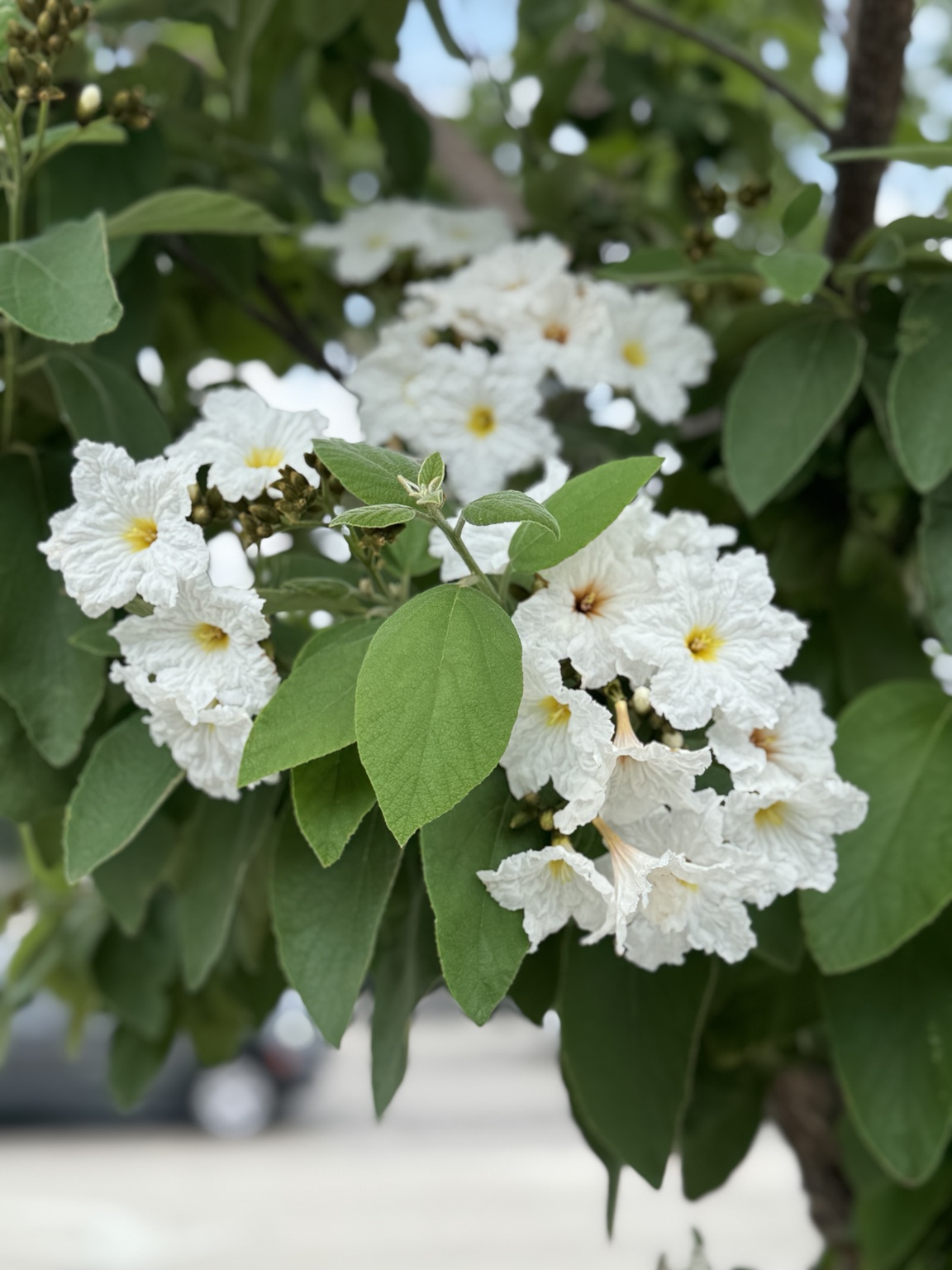
White trumpet-shaped flowers over a long warm season, set against soft gray-green leaves.

Plant fit at a glance

Mature height & width
About 15–20 ft tall and 10–20 ft wide
Foliage
Evergreen in warm sites; may shed leaves after cold weather
Winter cold
Approximately upper teens to 20°F for established plants; freeze damage is possible
Before planting
Fallen fruit can create litter; avoid planting directly over busy paving.

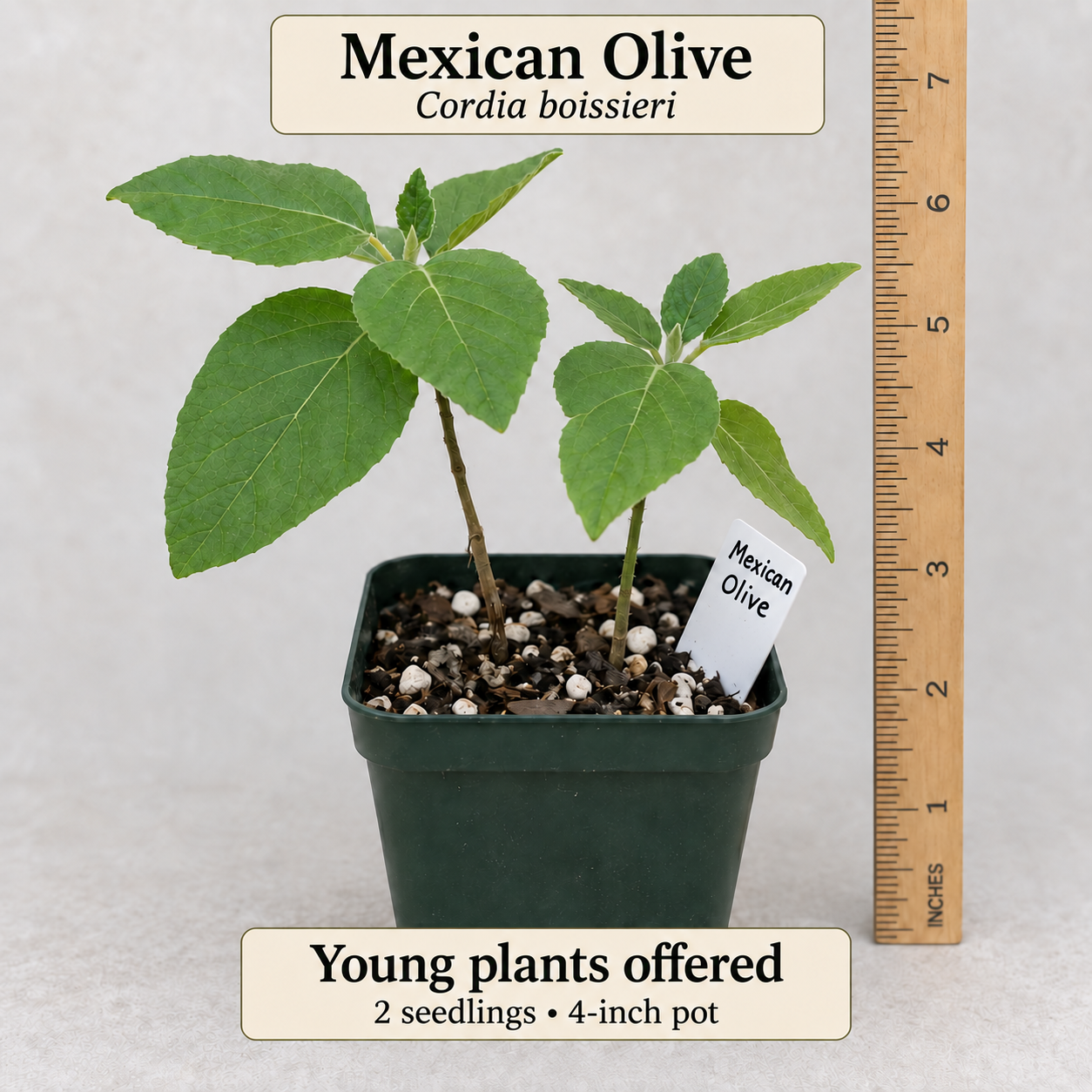
Dimensions and cold guidance describe established plants, not a guarantee for seedlings. Protect young plants; soil, drainage, exposure, and freeze duration matter.

Growing reference
Open the growing guide

Before you choose

Is it a good match for your landscape?

Mature form
Evergreen shrub or small tree
Growing conditions
Full sun · Alkaline soil · Heat · Low-water landscapes · Pollinator and wildlife gardens

Choose a warm, sunny site with good drainage. In Austin, simple winter trunk protection supports outdoor growth, while a large movable container offers added flexibility.

The personal story

Why I keep growing Mexican Olive

Its common name is misleading: this is not a Mediterranean olive, but a distinctive native known in South Texas and Mexico as anacahuita.

Known as anacahuita, Mexican Olive belongs to the borderlands of South Texas and northern Mexico. Its luminous white flowers stand out against soft gray-green leaves, and its fruit supports wildlife. It is not a Mediterranean olive.

I grow mine outdoors in Austin and pay attention to its location and seasonal needs. It has also reminded me to question assumptions: in my own trials, its seeds germinated better after a period in the refrigerator, despite the plant’s warm-climate origins.