← Back to the plant collection

Botanical Scout plant profile

Candlestick Tree

Senna alata (syn. Cassia alata)

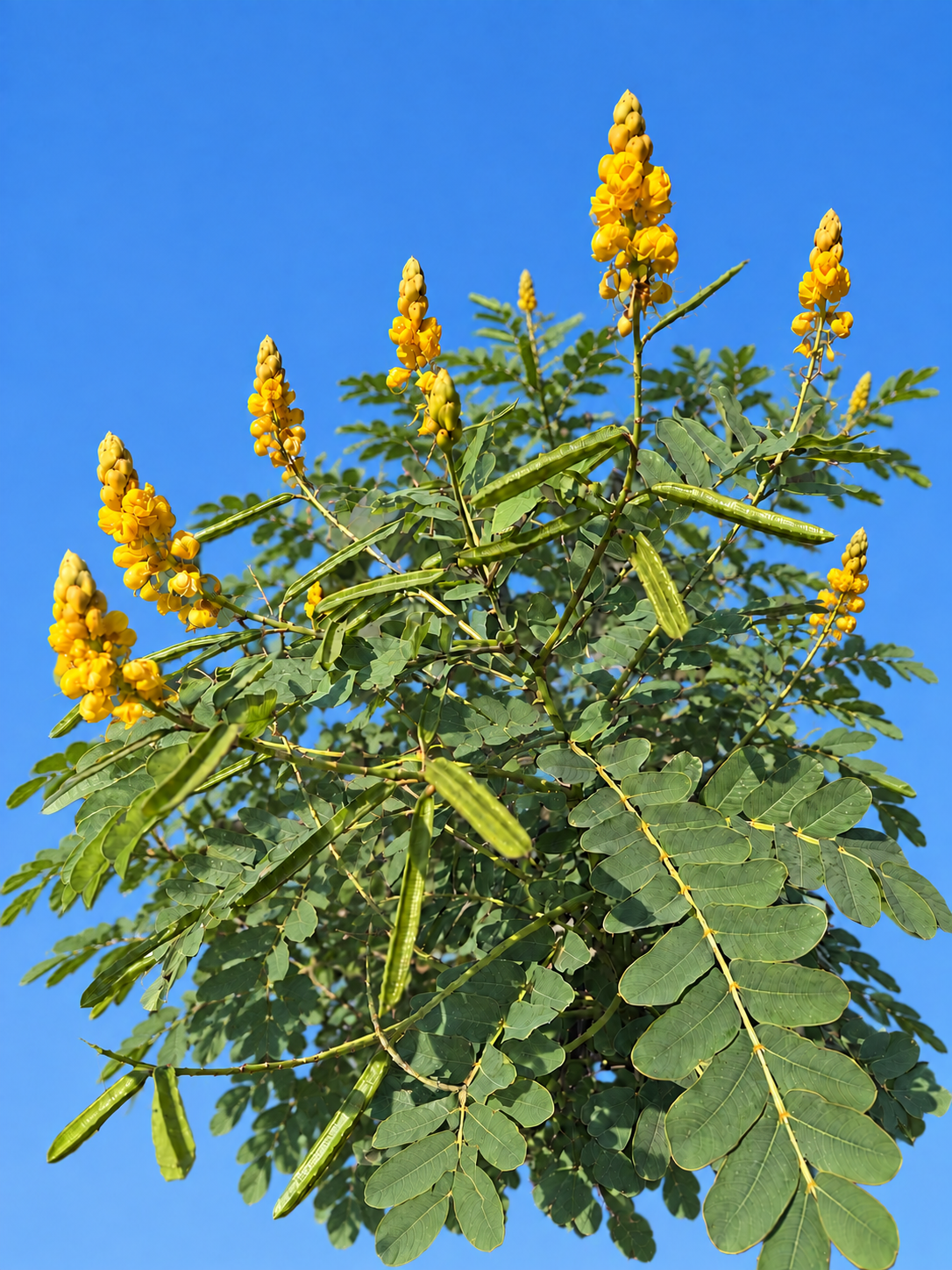
Large leaves and upright golden flower spikes create a bold warm-season display. My established Austin plants flowered through exceptional heat and dry weather.

Plant fit at a glance

Mature height & width
About 10–15 ft tall and wide in frost-free climates; often smaller with seasonal dieback
Foliage
Evergreen in frost-free climates; dies back in freezing weather
Winter cold
Generally Zones 10–11 as a permanent shrub; return from roots in colder sites is variable
Before planting
Remove mature pods if volunteer seedlings are not wanted.

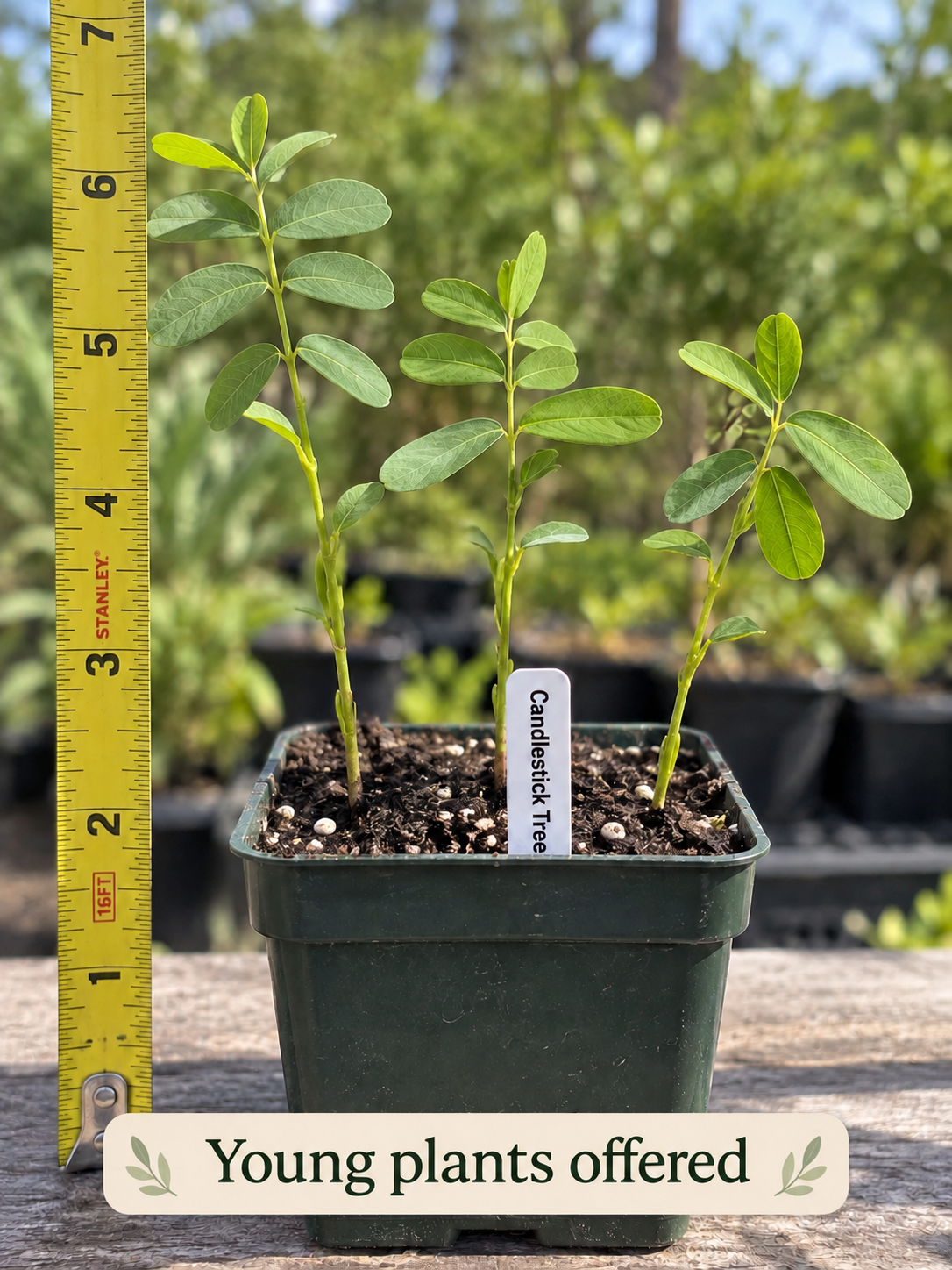
Dimensions and cold guidance describe established plants, not a guarantee for seedlings. Protect young plants; soil, drainage, exposure, and freeze duration matter.

Growing reference
Open the growing guide

Before you choose

Is it a good match for your landscape?

Mature form
Bold flowering shrub or small tree
Growing conditions
Full sun · Intense summer heat · Well-drained soil · Seasonal color · Pollinator landscapes

Give it room for large leaves and fast warm-season growth. A warm site and winter protection help young plants establish, while mature plants can develop impressive heat resilience.

The personal story

Why I keep growing Candlestick Tree

The flower spikes really do resemble golden candles. What makes the display more surprising is when it appears: this Austin plant continued flourishing and flowering after more than 40 days without rain during a summer with over 40 days at 100°F or higher.

Candlestick Tree is native from southwestern Mexico through tropical America. Its upright golden flower spikes resemble candles held above large leaves, followed by distinctive winged pods.

My established Austin plants flourished and flowered in poor soil with little supplemental water after roughly 40 days without rain, during a summer with more than 40 days at 100°F or higher. That surprised me. It is an observation about established plants, rather than a promise that young seedlings can tolerate the same conditions.