
The personal story
Why I keep growing Fragrant Elephant Tree
A fresh flush of leaves. A curl of peeling bark. A trunk slowly taking shape. Growing this tree is a chance to enjoy those small discoveries.
I collected the seeds for these plants near a road construction site in southern Baja California, Mexico. For me, growing them carries a connection to that place—and sharing the seedlings lets their story continue in another gardener’s care.
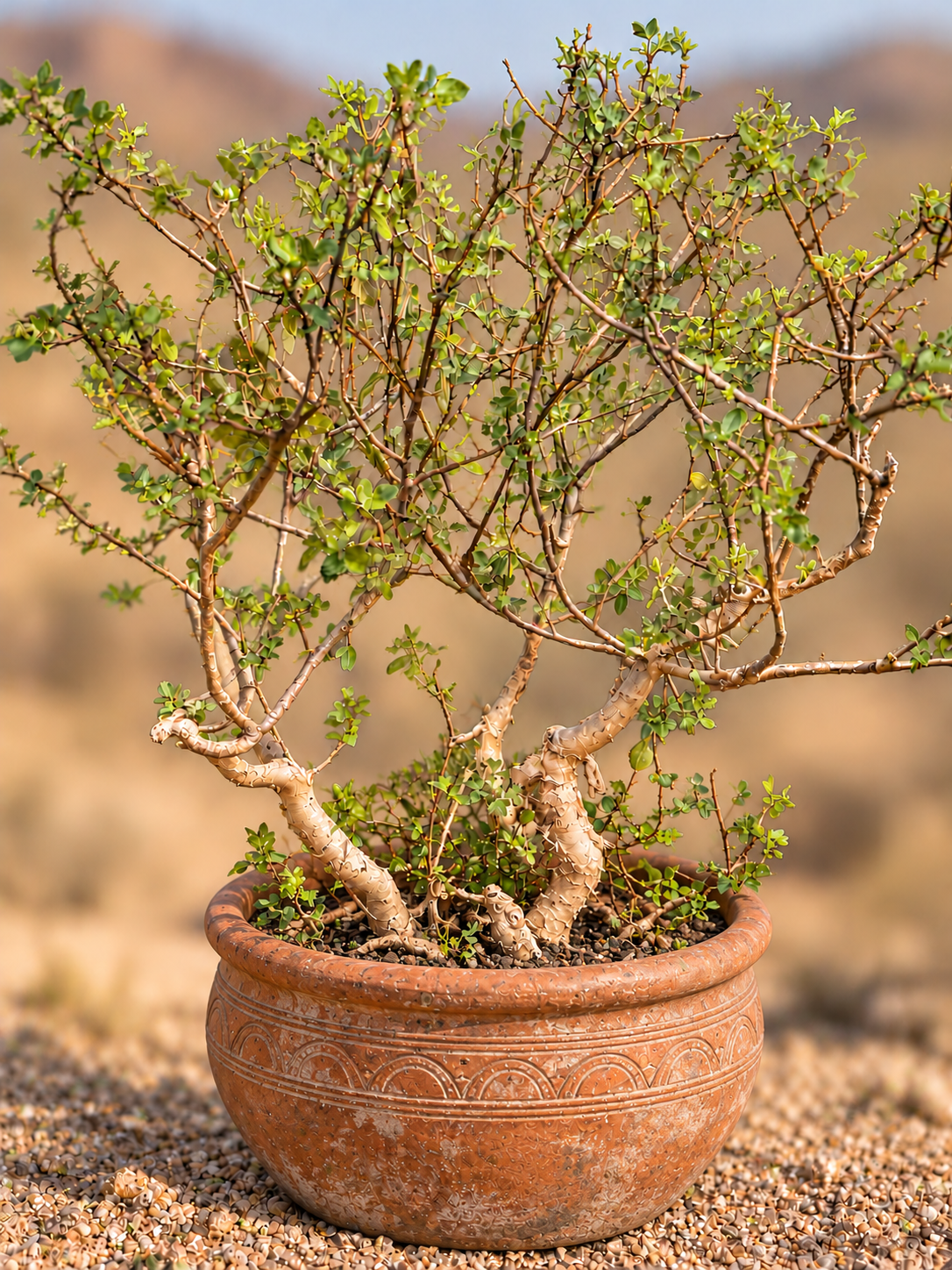
Some plants catch your attention with flowers. This one rewards a closer look. Its trunk thickens with age, delicate leaves release a citrus-like fragrance when gently crushed, and papery bark gradually peels away to reveal smoother, greenish bark beneath.
Bursera fagaroides brings the character of a dry landscape into a container. Its unusual proportions appeal to succulent collectors, curious gardeners, and anyone interested in bonsai. Let it develop naturally, or gradually shape it into a small tree with a character all its own.
From Mexico’s dry landscapes
Native primarily to Mexico, with its documented range extending into southern Arizona, this species grows in thornscrub and seasonally dry woodland, sometimes on rocky limestone slopes. Its life follows the rhythm of rain and long dry periods.
When moisture becomes scarce, it can shed its leaves to reduce water loss. Those bare periods reveal its branching framework—part of what makes it so interesting to grow and shape. Before falling, the leaves may turn yellow, orange, or red, bringing an unexpected touch of autumn to a succulent collection.
Copal, fragrance, and everyday ingenuity
Its aromatic resin, known as copal, has historically been used for incense and perfumes. Copal-producing trees of the Bursera genus hold a longstanding place in Indigenous Mexican cultural traditions, including ceremonial incense.
The tree also has a practical history: its gum has been used as an adhesive to mend household dishes, and tannins from its bark have been used in leather processing.
You may see it called “Mexican frankincense.” Its resin is copal; true frankincense comes from Boswellia trees. Both belong to the same aromatic plant family, connecting this small tree to the fragrant resins people have treasured for generations.
The pleasure is in watching it become
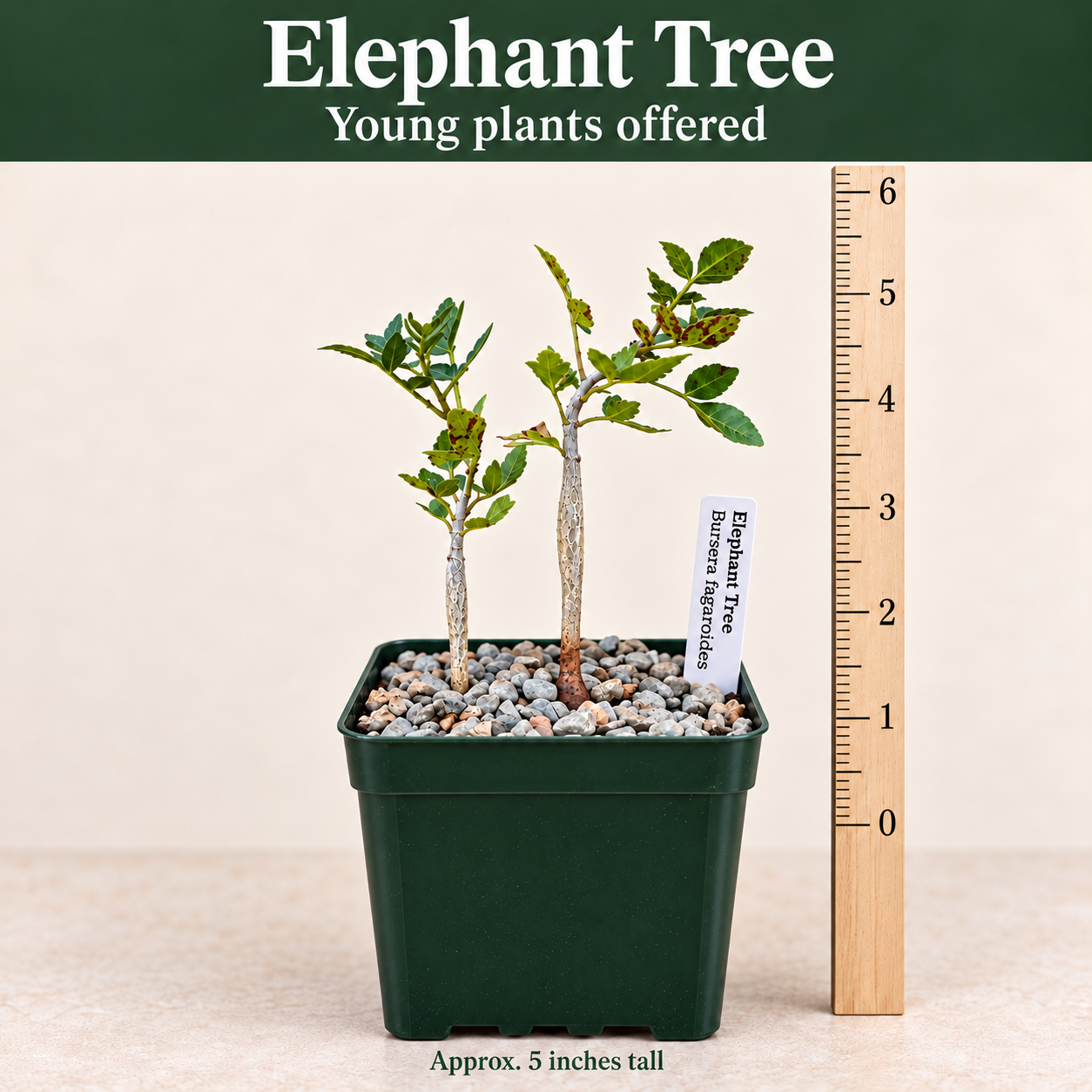
Your seedling begins modestly. With time, its trunk gains substance, branches develop, and its distinctive bark becomes more pronounced. The mature character develops gradually, giving you something to observe and nurture through the seasons.
You begin with a little life already underway—and the pleasure of seeing what it can become.
Main image is an edited illustration based on Steve’s own plant photograph, with adjusted trunks, pot, and background. It shows mature character for inspiration; you receive two young seedlings in one 4-inch pot. Botanical and traditional-use reference.
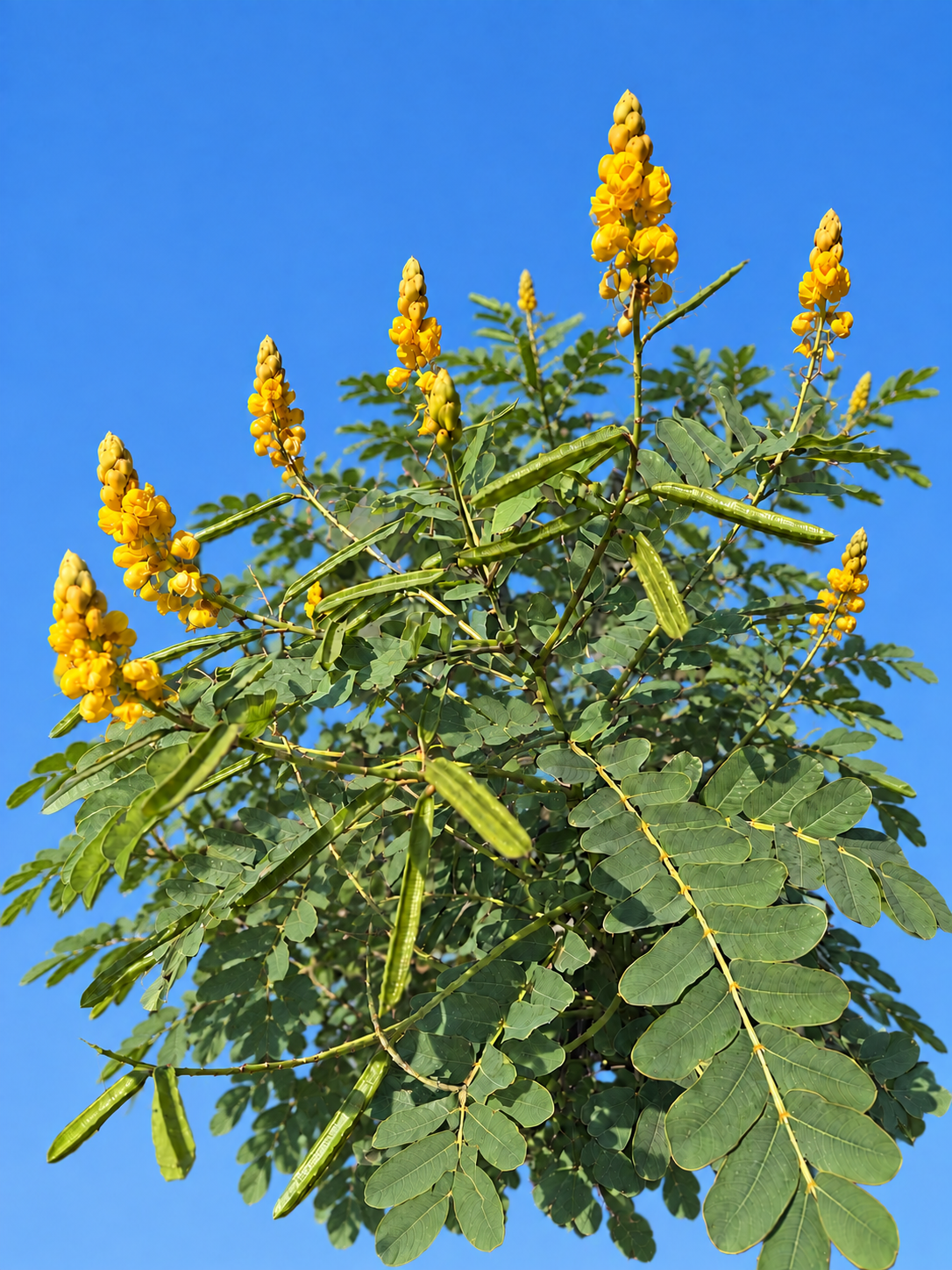 Mature plant — growth reference
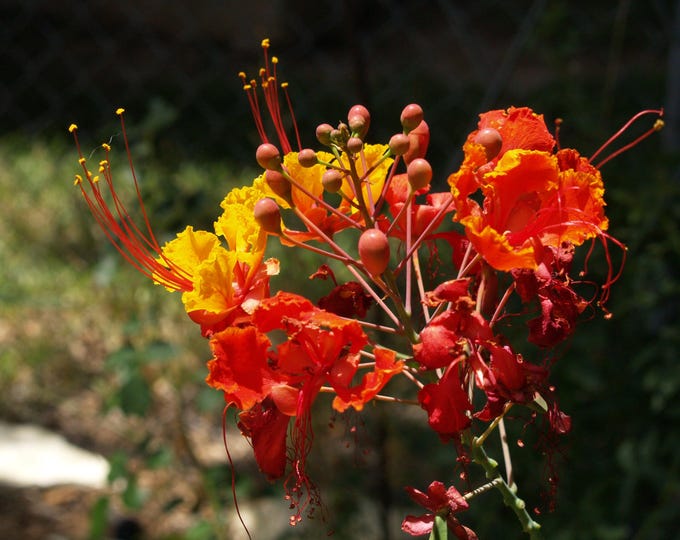 Mature plant — growth reference